Heating advice for UK homeowners
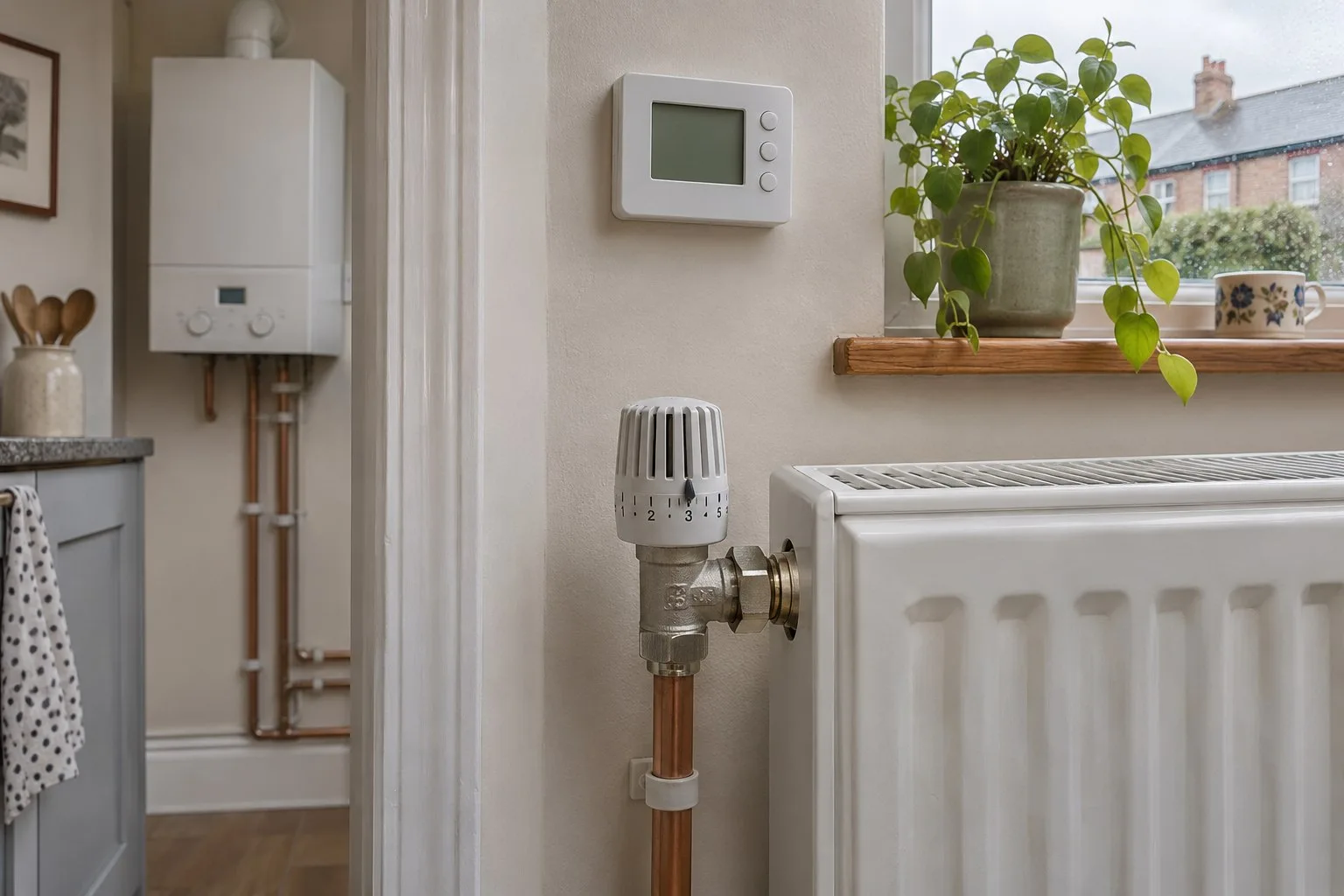
Good heating advice starts with the fact that the boiler is only part of a central heating system, and the rest of it is worth as much attention as the boiler. Controls, filters, treatment fluid, the hot water cylinder and the flue all affect how much heat you get for your money. The Energy Saving Trust says that heating and hot water make up over half of what a household spends on energy in a year, so the parts around the boiler are worth getting right when you replace it.
Heating advice on controls
There is a wide range of heating controls, and the Energy Saving Trust says they help a heating system work more efficiently and keep bills down. A thermostat tells the boiler when to stop and start, and a timer sets the hours it runs. When you replace a boiler, ask the installer which controls they are fitting and whether they work with your system. The Energy Saving Trust’s cost for replacing an old gas boiler with an A-rated one includes thermostatic radiator valves.
Heating advice on filters and inhibitors
Rust and sludge are what shorten a boiler’s life, and two cheap parts fight them. Building regulations encourage the use of magnetic filters to remove rust from the heating water, and the Energy Saving Trust says that if you replace your boiler, your plumber should fit one near the boiler if you don’t have one. A chemical inhibitor lowers the corrosion rate and prevents sludge and scale building up. It should be refreshed or replaced whenever an engineer drains the system during maintenance or a boiler replacement.
When the system is already full of sludge, a power flush cleans it before a new boiler goes on.
Hot water cylinders
If you have a system or regular boiler, the hot water cylinder matters. New cylinders are factory insulated to keep water hot for longer, and the Energy Saving Trust says it is important that they are fully insulated so heat doesn’t escape. A cylinder also lets you store energy from solar panels. The trade-off is space, which is why a combi boiler, which needs no cylinder, suits smaller homes. Our boiler types page compares them.
Flue gas heat recovery
Some of the heat a boiler makes escapes through the flue. Passive flue gas heat recovery systems capture some of that lost energy and use it to heat your water. The Energy Saving Trust says it isn’t usually practical to fit one to an existing installation, but if you are fitting a new boiler you can choose a model with heat recovery built in, or ask your installer to fit a separate device alongside it.
Heating advice for when you replace the boiler
Replacing a boiler is a good moment to look at the rest of the system, because the engineer has the heating drained and the radiators accessible. Ask for the controls, the filter and the treatment to be included in the quote, and check each against our boiler quote checklists. Our combi boiler prices page shows what each type costs fitted, and our boiler advice page links to every guide on choosing, buying and looking after a boiler.
If you are thinking about a heat pump, the Energy Saving Trust says that most work with a hot water cylinder, so moving to a combi now may mean putting a cylinder back later. When you are ready to compare, get free quotes from Gas Safe installers.
Source: Energy Saving Trust, Boiler types explained, last updated 20 May, read on 3 November.
Get quotes for your home
A guide price only takes you so far. Local firms can price the work on your own home, and comparing a few quotes is the quickest way to see what is reasonable.
Compare free quotes