Guides
Gas emergency: what to do if you smell gas
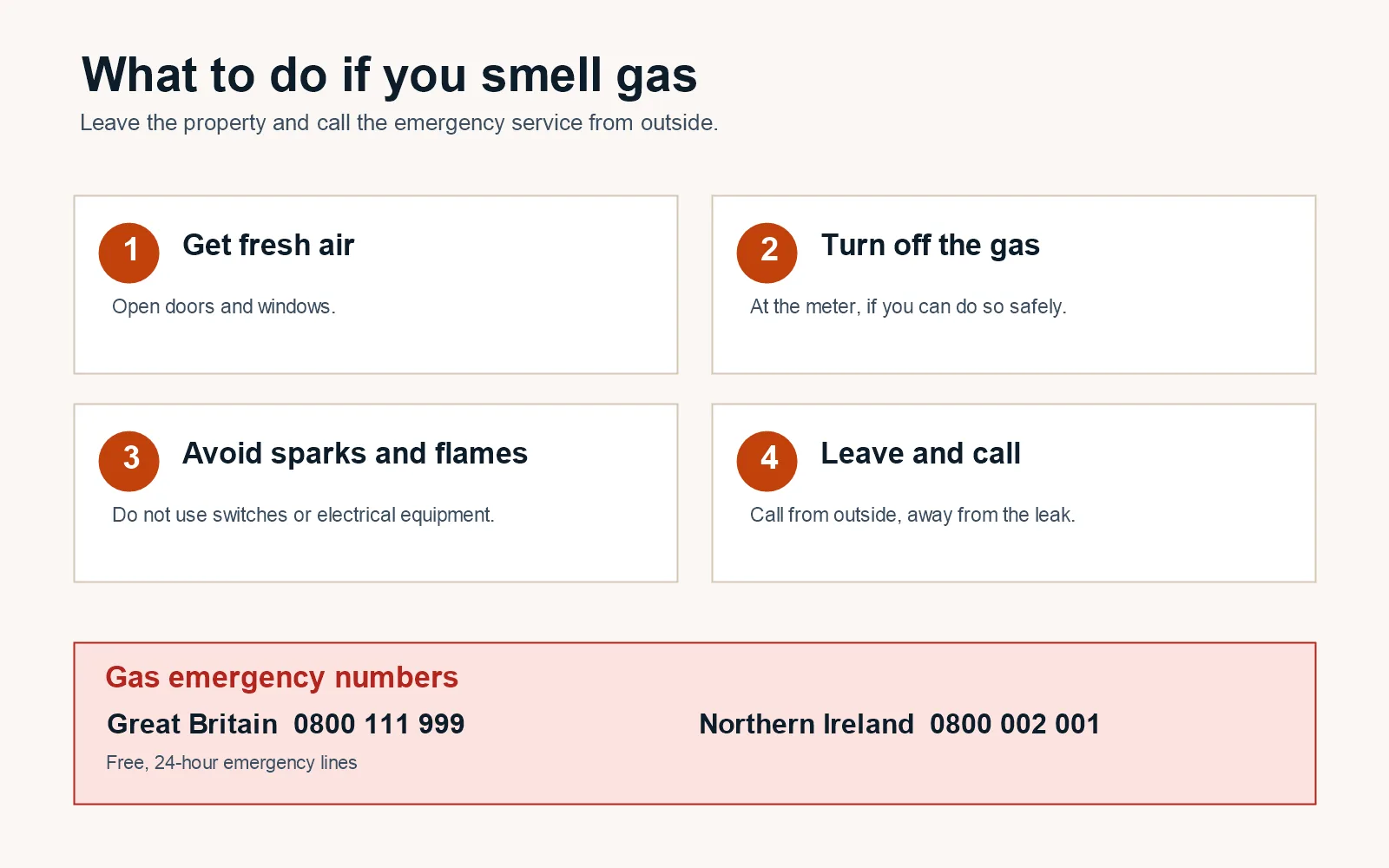
In a gas emergency you get fresh air, stop the gas and call the free National Gas Emergency number, which is 0800 111 999 in England, Scotland and Wales and 0800 002 001 in Northern Ireland. Act first and ask questions afterwards. A badly fitted or poorly serviced gas appliance can cause gas leaks, fires, explosions and carbon monoxide poisoning, so the smell of gas is never something to wait on.
What to do if you smell gas
Gas Safe Register lists these steps for a gas emergency, in this order:
- Get fresh air. Open all doors and windows to ventilate the area.
- Turn off the gas. Close the gas emergency control valve at the meter, unless the meter is in a basement or cellar, or it is an LPG bulk tank or storage vessel.
- Put out naked flames and don’t smoke.
- Don’t touch electrical switches. Turning a light on or off can ignite escaping gas.
- Call the gas emergency number for your area.
If the engineer who attends finds a problem with an appliance, follow their advice and have a Gas Safe registered engineer fix it and check it is safe. Don’t turn the gas supply back on until a Gas Safe registered engineer has checked it. If you feel unwell, go to your GP or hospital at once and say that you may have been exposed to carbon monoxide.
Who to call in a gas emergency
The National Gas Emergency Helpline is free and runs around the clock. The number depends on where you live and what gas you use:
- England, Scotland and Wales, natural gas: 0800 111 999.
- Northern Ireland, natural gas: 0800 002 001.
- LPG: the contact number on your bulk storage vessel or meter. For cylinders, check your local telephone directory.
The Isle of Man, Jersey and Guernsey have their own numbers, which Gas Safe Register lists on its gas emergency page.
What a gas leak smells like
Gas has no smell of its own. Suppliers add a harmless chemical called mercaptan, which gives off a strong sulphur-like smell that is often compared to rotten eggs. That smell is usually the first warning. Physical symptoms can follow, and the common ones are feeling lightheaded, nausea, dizziness and headaches. If you have any of them and you suspect a leak, go outside into fresh air and call the helpline.
Carbon monoxide is different
Carbon monoxide has no smell, no taste and no colour. It is a by-product of a gas appliance that isn’t working safely, and only a carbon monoxide alarm will detect it. Gas Safe lists six main symptoms: headaches, dizziness, nausea, breathlessness, collapse and loss of consciousness. Because they resemble flu or food poisoning, they are easy to mistake.
Other signs include symptoms that ease when you leave the house, several people in the home being ill at the same time, and pets behaving oddly. If you suspect carbon monoxide, turn off the gas appliance if it is safe to do so, open doors and windows and leave the property for fresh air. Contact NHS 111 for advice, and call 999 or go to A&E if someone has severe symptoms such as difficulty breathing, sudden confusion or loss of consciousness. Then call the gas emergency number.
After a gas emergency
Only a Gas Safe registered engineer should confirm or fix a gas leak, so check their ID card before they start. Our Gas Safe Register guide shows how. Gas Safe also recommends audible carbon monoxide alarms around the home and regular safety checks and servicing of your appliances.
If the emergency involved your boiler, a boiler service is the usual next step, and our guide to boiler fault codes explains what a code on the display means. If the boiler is old or keeps faulting, our combi boiler prices page shows what a replacement costs, and you can get free quotes from Gas Safe installers.
Sources: Gas Safe Register, what to do in a gas emergency and carbon monoxide poisoning, read on 3 November. In an emergency, call the helpline before you read anything else.
Get quotes for your home
A guide price only takes you so far. Local firms can price the work on your own home, and comparing a few quotes is the quickest way to see what is reasonable.
Compare free quotes